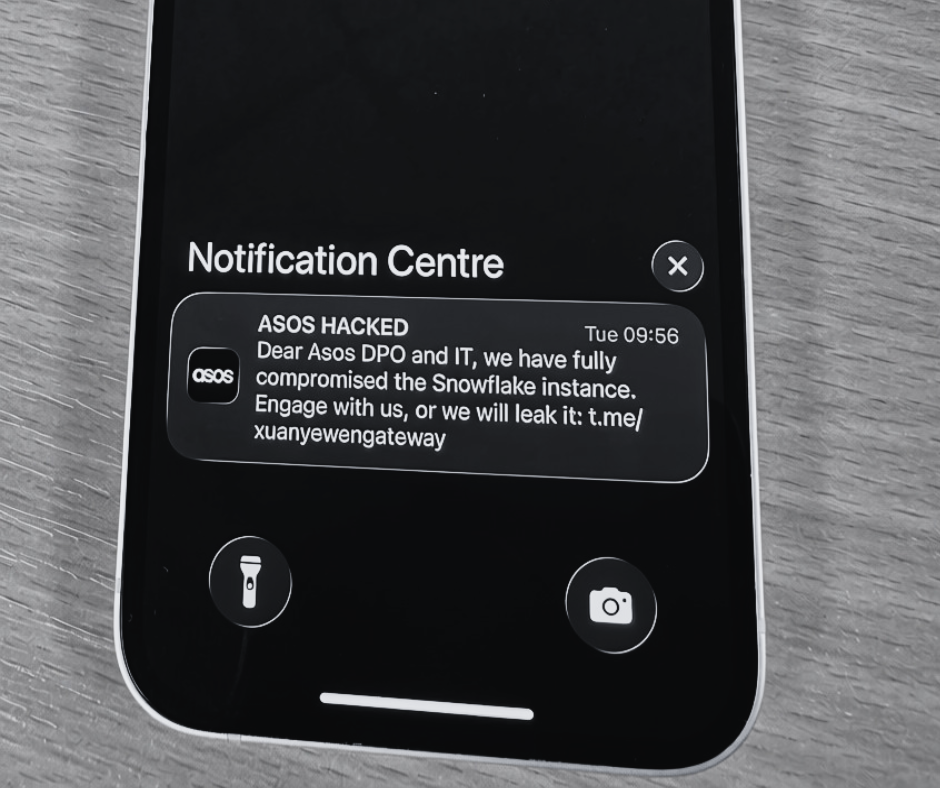
Running a small business in 2026 means operating in a threat landscape where cyber criminals target organisations that look busy, under-resourced, and reliant on email, cloud tools, and online banking. That is not a niche situation, it is most UK firms. A cyber security roadmap gives you a practical sequence of actions so you improve protection without stalling the business, or spending money on tools you cannot manage.
This guide focuses on decisions a small business owner can actually make. It prioritises risk reduction, fast wins, and a path to stronger cybersecurity maturity over time. It also flags where specialist support helps, particularly when you are dealing with sensitive information, regulated clients, or supply chain requirements.
A roadmap is not a single document you write and forget. It is a living plan that you review as your organisation changes, new technologies land in the IT environment, and attackers find new angles.
The aim is a security posture that is good enough to prevent most cyber attacks, and organised enough to respond quickly if you still get hit.
Key Takeaways
Build your roadmap around risk assessment, then improve controls in a sequence you can sustain.
Focus on email security, identity, patch management, and backups before niche tooling.
Make security awareness training part of routine operations, not a one-off exercise.
Use a baseline such as the Cyber Essentials certificate to create momentum and evidence for clients.
Start with a simple, realistic definition of a cyber security roadmap
A cyber security roadmap is a structured plan that links business objectives to security measures, with owners, deadlines, and a way to prove progress. For small businesses it works best when it is written in plain language, tied to your systems and data, and backed by a short list of controls you can maintain.
You are not trying to predict every cyber crime scenario. You are choosing the controls that block the most common attacks, then adding depth where your risk assessment shows exposure. A roadmap also stops “security shopping”, where a company buys tools after a scare, then fails to maintain them.
The most useful roadmap has a time horizon and a cadence. Many small organisations use 30, 90, and 180-day milestones because they map well to budgets and workload. Pick a rhythm that fits your organisation, then stick to it.
Map what you need to protect and why it matters
A roadmap starts with clarity on assets. In practice, that means knowing which systems matter to business operations, which data would trigger customer fallout, and which accounts could move money. You can do this without formal tooling.
Start with a short inventory. List devices, operating systems, key software, cloud services, bank access, accounting tools, and remote access. Include who administers each part, even if the answer is “the owner” or “our external IT”.
Now connect that inventory to impact. Ask: if this is unavailable for a day, what breaks? If this data leaks, who calls us first? If a cyber incident hits email, what can we still do? This exercise is where small businesses often find hidden single points of failure, especially around shared inboxes and finance workflows.
Run a risk assessment you can actually use
A risk assessment does not need a consultancy deck. It needs a list of likely cyber threats for your sector, the vulnerabilities that make them plausible, and the actions that reduce exposure. Keep it short enough that you will review it again.
For most small businesses, the top cyber security risks include phishing, credential theft, ransomware attacks, invoice fraud, and supplier compromise. Social engineering is often the delivery mechanism because it scales, and human error is a constant in busy teams. Where you have a supply chain, your risk expands because attackers can exploit a weaker partner to reach you.
Score each risk on likelihood and impact, then decide what you do this month versus what goes into the backlog. This is the point where you avoid false precision. Your goal is prioritisation and accountability, not a perfect model.
Stabilise the basics that stop most cyber attacks
If you want the highest return on effort, start with identity, patching, and endpoint protection. These basics underpin almost every other security measure and directly reduce successful attacks.
Enforce multi-factor authentication (MFA) on email, cloud services, finance platforms, and admin consoles. Where you can, use an authenticator app rather than SMS. Check for shared accounts and replace them with named users and role-based access control so you can remove access cleanly when someone leaves.
Ensure operating systems and core software are kept up to date, including browsers and office suites. Most ransomware attacks still exploit old vulnerabilities, and attackers move fast once an exploit is public. “We will do it next week” is a common gap filler.
Use reputable endpoint protection, disk encryption, and screen locks. If you have remote workers, ensure the same standards apply off-site. A laptop lost in a taxi can become a data breach if it is not encrypted and managed.
Secure email, because it is still the main entry point
Email is where most small-business breaches begin, because it is where trust is exploited. A roadmap should prioritise email security, not treat it as an afterthought.
Start with the platform. Business email on Microsoft 365 or Google Workspace provides greater control than personal accounts. Then enforce MFA, block suspicious forwarding rules, and enable alerts for unusual sign-ins. Review connected applications, because third-party integrations can become a quiet back door.
Implement a verification step for any change to bank details and any urgent payment request, even if it appears to come from the owner. This is where business email compromise causes direct financial loss, and the fraud often appears plausible. Staff should have a clear path to flag phishing without embarrassment.
When people hesitate, you lose time, and time is what attackers need.
Build backup and recovery into the roadmap, not into panic
Backups are not glamorous, but they are the difference between disruption and collapse. They also protect you from ransomware, accidental deletion, and hardware failure. Your roadmap should define what data must be backed up, how often, and how you prove restores work.
Use the 3-2-1 principle as a practical baseline, then adapt it to your tools. If you rely heavily on SaaS, confirm what your provider backs up versus what you must back up yourself. This is where assumptions create gaps.
Test restores on a schedule. A backup you cannot restore is a false sense of security. Testing also forces you to document who can do what during an incident, which is a key part of operational readiness.
If you want a packaged approach to backup and recovery, we offer an enterprise data backup and recovery service with encrypted storage and disaster recovery support.
Make staff part of the control set
Security awareness training is one of the few controls that improves with repetition rather than complexity. It is also where many small businesses fail because training is treated as a compliance tick-box rather than a habit.
Keep training short and regular. Use examples that match your organisation: supplier invoice changes, fraudulent delivery notifications, and calls claiming to be “IT support”. Make sure people understand how attackers use social engineering and why “urgent” is a red flag.
A short monthly reminder, a quick debrief after a suspicious email, and visible leadership support all help. Senior leadership matters because staff take cues from what leaders prioritise, not what posters say.
Add baseline governance that fits a small business
Governance is not about bureaucracy; it is about clarity. Your roadmap needs named owners, decision rules, and a way to track actions. Without that, security becomes everyone’s job, which usually means no one’s job.
Start with a single page of policies that reflect how you work: acceptable use, password expectations, device rules, and your payment approval process. Keep it practical so staff will follow it. Then create a simple register of who has admin access and who approves security changes.
Schedule a quarterly review, and use it to check progress against your roadmap, review incidents and near-misses, and re-run the risk assessment at a high level.
This is how you improve cybersecurity posture without waiting for a crisis.
Use Cyber Essentials as a roadmap anchor
For UK small businesses, Cyber Essentials is not an arbitrary standard. It is a UK government-backed cyber security scheme, overseen by the National Cyber Security Centre (NCSC), and designed specifically to help organisations protect themselves against the most common cyber attacks.
The scheme defines a clear baseline of five technical controls: secure configuration, user access control, malware protection, security update management, and firewalls. These controls are published by the NCSC and are widely recognised as the minimum level of cyber hygiene required to reduce exposure to everyday threats such as phishing, malware, and ransomware.
If you are new to cyber security certification, Cyber Essentials works well as a practical roadmap framework, even before formal assessment. Many small businesses use the control set as a structured checklist, implementing each requirement in turn, documenting progress, and then deciding whether and when to certify. This approach allows you to evidence improvement rather than aiming for perfection on day one.
Certification also has clear commercial value. Many UK organisations now ask suppliers to demonstrate basic cyber security controls as part of onboarding and procurement, particularly where personal data is involved or services are delivered into regulated sectors. Holding Cyber Essentials certification often reduces the need for repeated security questionnaires and provides a recognised assurance marker to customers and partners.
At Immervox, we support this process through our Cyber Essentials package, designed for small and mid-sized businesses seeking cost-effective support to implement the required controls and, where appropriate, achieve certification.
Plan for incidents, because prevention is not perfect
A cyber incident plan does not need to be complex, but it must exist before you need it. Your roadmap should include a basic incident response checklist and a brief exercise to test it.
Define who makes decisions, who contacts your bank, who talks to clients, and who works with technical support. Document the first steps: isolate affected devices, preserve evidence, and stop the spread. Also, document what not to do, such as wiping machines before you understand what happened.
Include external contacts, such as your IT provider, your cyber insurance hotline, and reporting channels like Action Fraud. The plan should also cover when you might need advice on data breaches and regulatory compliance, including whether you must notify the ICO.
Once per year, run a tabletop exercise. Pick a scenario that fits your business, then walk through how you would respond. You will quickly identify gaps, and fixing them is far cheaper than learning in real time.
Why Choose Immervox?
Building a cyber security roadmap is not just about choosing the right tools. It is about understanding how your business actually works, where risk genuinely sits, and how to improve security without creating friction for staff or customers. That is where working with a partner who understands small business realities makes a difference.
At Immervox, we work with UK organisations that need practical cyber security, not theory. We help translate guidance and best practice into actions that fit your size, sector, and risk profile, whether that means strengthening email security, tightening access to sensitive systems, or putting reliable backup and recovery in place.
For many businesses, the first step is establishing a clear security baseline. Our Cyber Essentials package supports this by helping you implement the required controls in a structured way, giving you confidence that the fundamentals are covered and providing reassurance to customers who expect evidence of cyber hygiene.
Where risks are higher or environments are more complex, our Cyber Security Improvement project takes a broader view. We assess your current environment, identify gaps, and support implementation across technology, process, and staff awareness, so improvements are sustainable rather than reactive.
Cyber security also depends on resilience when things go wrong. Our Enterprise Data Backup & Recovery services protect critical systems and data, while our Professional Services team supports planning and delivery when changes need to be made carefully and with clear ownership.
Conclusion
A cyber security roadmap for a small business is a commitment to steady improvement, not a one-off project. You start by understanding your assets and cyber risks, then you implement security measures that reduce the most likely cyber attacks. Over time you add governance, testing, and a baseline standard such as the Cyber Essentials certificate.
If you do nothing else this week, focus on MFA, patch management, and backups you can restore. Those controls reduce risk quickly and create the foundation for everything that follows. Then schedule the next steps so progress does not depend on panic or memory.
If you want support to build and deliver your roadmap, Immervox’s cyber security, managed IT support, and cloud services provide a practical route from assessment to implementation to ongoing management.
Frequently Asked Questions
How do I build a cyber security roadmap for a small business with no IT team?
Start with a short risk assessment, then prioritise controls you can maintain: MFA, patch management, endpoint protection, backups, and email security. Assign an owner for each action, even if it is the business owner, and track progress monthly. If you need help with planning and delivery, consider a managed service provider so the roadmap does not stall.
What are the most common cyber attacks on small businesses in the UK?
Phishing, credential theft, business email compromise, ransomware attacks, and supplier-related compromise are common. Many incidents start with social engineering that exploits routine workflows, especially around payments and shared inboxes. Your roadmap should treat email and identity as primary controls.
What should a small business include in a cyber incident response plan?
Include decision owners, technical isolation steps, contact lists, and communications rules for staff and clients. Document how you will preserve evidence, who contacts the bank, and how you will handle potential data breaches. Test the plan annually so it is usable under pressure.
How to improve cyber security in a small business without overspending?
Avoid tooling sprawl. Spend first on controls that reduce broad risk: MFA, patching, endpoint protection, secure backups, and security awareness training. Use a roadmap to sequence improvements, then measure outcomes such as reduced vulnerabilities, fewer risky behaviours, and faster recovery capability.
Where can small businesses find reliable cyber security guidance?
UK small businesses should look for cyber security guidance from trusted, authoritative sources such as the National Cyber Security Centre (NCSC), which provides practical, government-backed advice focused on common threats. Many organisations also work with experienced cyber security providers to turn that guidance into clear, actionable steps that fit their size, budget, and day-to-day operations.